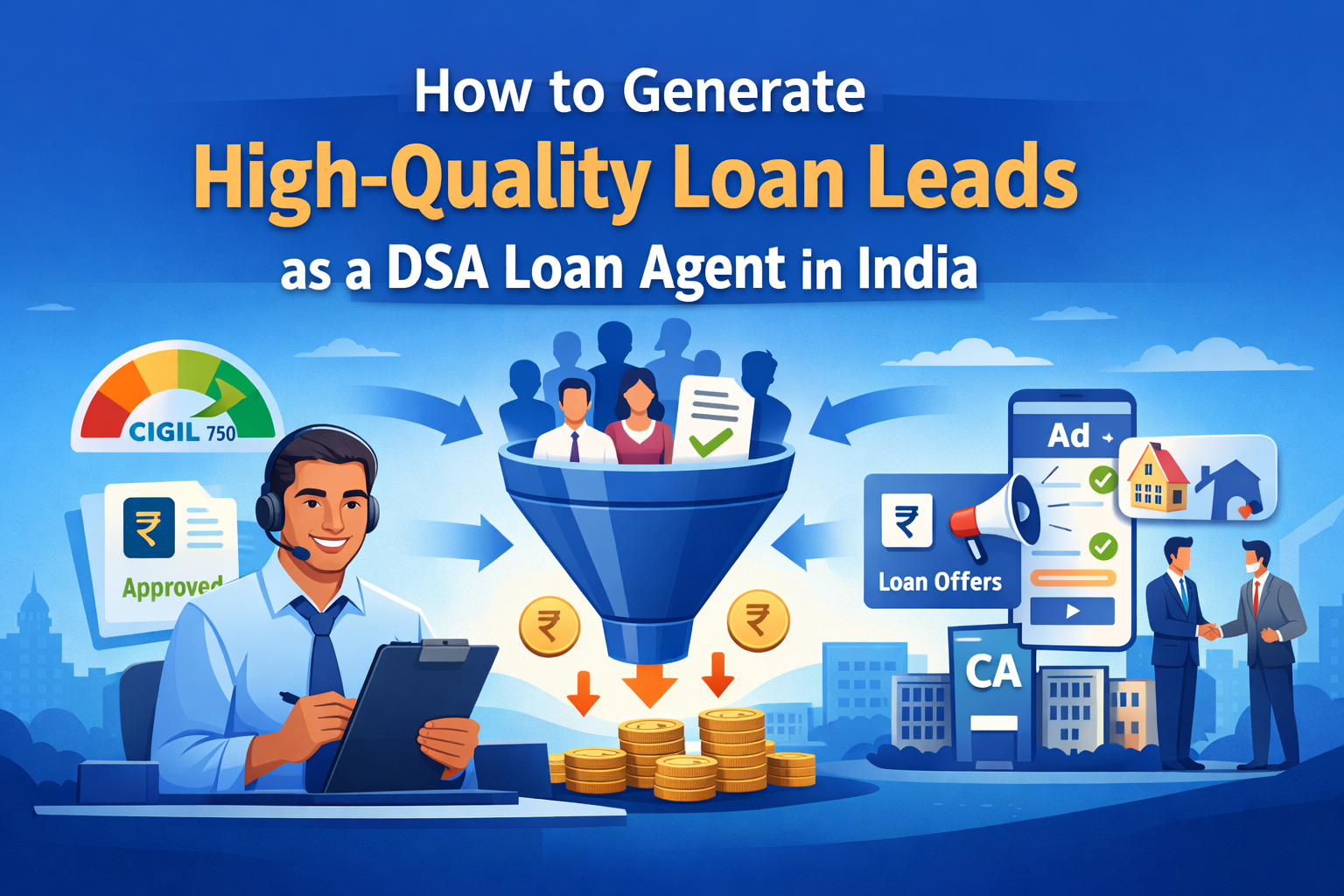
In today’s fast-paced financial industry, opportunities for individuals to earn by connecting borrowers with lenders are greater than ever. Two of the most common pathways are becoming a DSA Loan Agent or working as a Traditional Channel Partner. While both roles allow you to earn commissions by facilitating loans, the way they operate, the tools they use, and the earning potential can differ significantly.
If you’re exploring these options, this blog will help you understand the key differences so you can decide which is the best fit for you—especially in the era of digital lending powered by the best instant loan app platforms.
Who is a DSA Loan Agent?
A DSA (Direct Selling Agent) loan agent acts as a bridge between customers and financial institutions. Once you complete your bank DSA registration, you can represent multiple banks and NBFCs, sourcing leads for products like personal loans, business loans, home loans, and more.
Modern DSA loan agents work with digital platforms, which means you can:
- Access multiple lenders from a single dashboard
- Track applications in real time
- Get payouts faster
- Work flexibly without being tied to a single branch location
Who is a Traditional Channel Partner?
A traditional channel partner typically works directly with a single bank or lending institution. You might be contracted to promote only their loan products, often following offline processes such as physical form submissions, branch visits, and manual approvals.
While this can still be profitable, the limitations include:
- Limited product variety
- Fixed operating hours
- Slower application processing due to manual workflows
- Restricted earning potential if demand for that bank’s products is low
Key Differences Between DSA Loan Agents and Traditional Channel Partners
| Feature | DSA Loan Agent | Traditional Channel Partner |
|---|---|---|
| Registration | Simple bank DSA registration with digital onboarding | Often requires in-person meetings and physical paperwork |
| Product Range | Multiple banks/NBFCs, variety of loan types | Usually restricted to one institution’s products |
| Work Flexibility | Can work from anywhere, anytime | Often requires branch visits and fixed working hours |
| Earning Potential | Higher due to multiple product offerings | Limited to one lender’s commission rates |
| Tools | Uses best instant loan app and digital dashboards for faster processing | Relies heavily on offline paperwork and manual updates |
| Customer Reach | Wider audience due to variety of products | Limited to target customers of one bank |
| Payout Speed | Faster payouts via app tracking | Slower payouts due to manual processing |
Why Many are Choosing the DSA Loan Agent Path
The rise of fintech and instant loan apps has revolutionized the DSA model. By partnering with platforms that offer the best instant loan app, you can:
- Instantly submit applications online
- Get approvals faster
- Provide customers with more choices, improving your closing rate
- Track your commissions in real time
- Work independently without physical office restrictions
For individuals looking for flexibility, scalability, and faster income generation, becoming a DSA loan agent often makes more sense than limiting yourself to a traditional channel partner arrangement.
When a Traditional Channel Partner Model Might Work Better
While the DSA model offers significant advantages, there are situations where a traditional channel partner setup could be appealing:
- You have a long-standing relationship with a particular bank and want to exclusively represent their brand.
- Your target market has high demand for that bank’s loan products.
- You prefer working within a single lender’s framework rather than juggling multiple lenders.
However, even in these cases, the lack of product variety and slower processing speeds could impact your long-term growth.
Bank DSA Registration — Your First Step to Becoming a Loan Agent
If you decide to become a DSA loan agent, your journey starts with completing your bank DSA registration. Most modern platforms now allow this to be done online with minimal paperwork—just KYC documents, bank details, and a few digital signatures.
Once registered, you can start sourcing leads, submitting applications, and earning commissions without geographical limitations. By using the best instant loan app, you make the process faster, more transparent, and more convenient for your clients.
Final Thoughts
Both DSA loan agents and traditional channel partners play important roles in connecting borrowers with lenders. However, in a digital-first world where speed, variety, and flexibility are key, the DSA model—especially when powered by the best instant loan app—offers clear advantages.
If you’re ready to start, completing your bank DSA registration is a simple yet powerful step toward building a rewarding career in loan distribution. The choice is yours, but for many ambitious professionals, becoming a DSA loan agent is not just a job—it’s a scalable business opportunity.